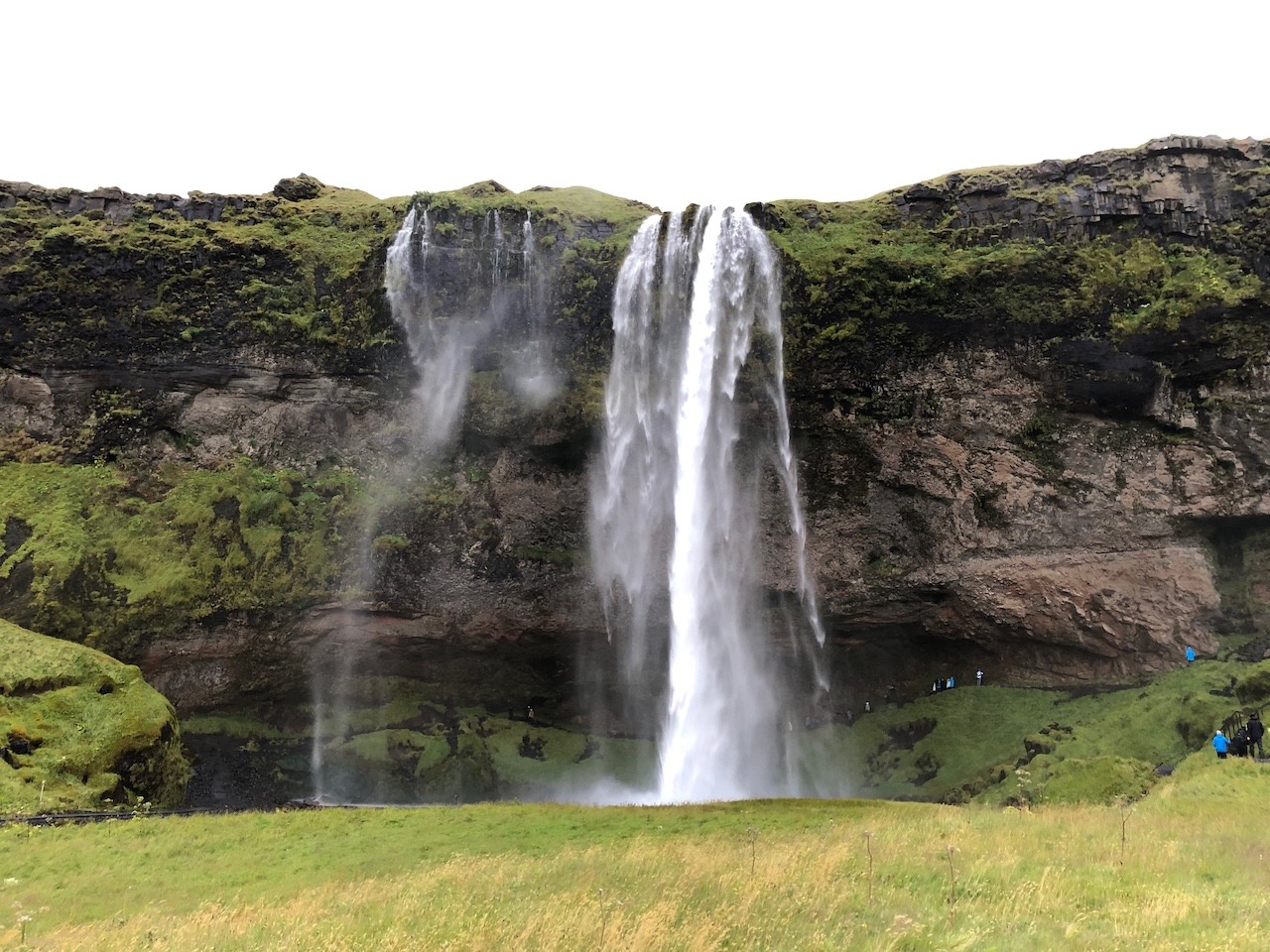
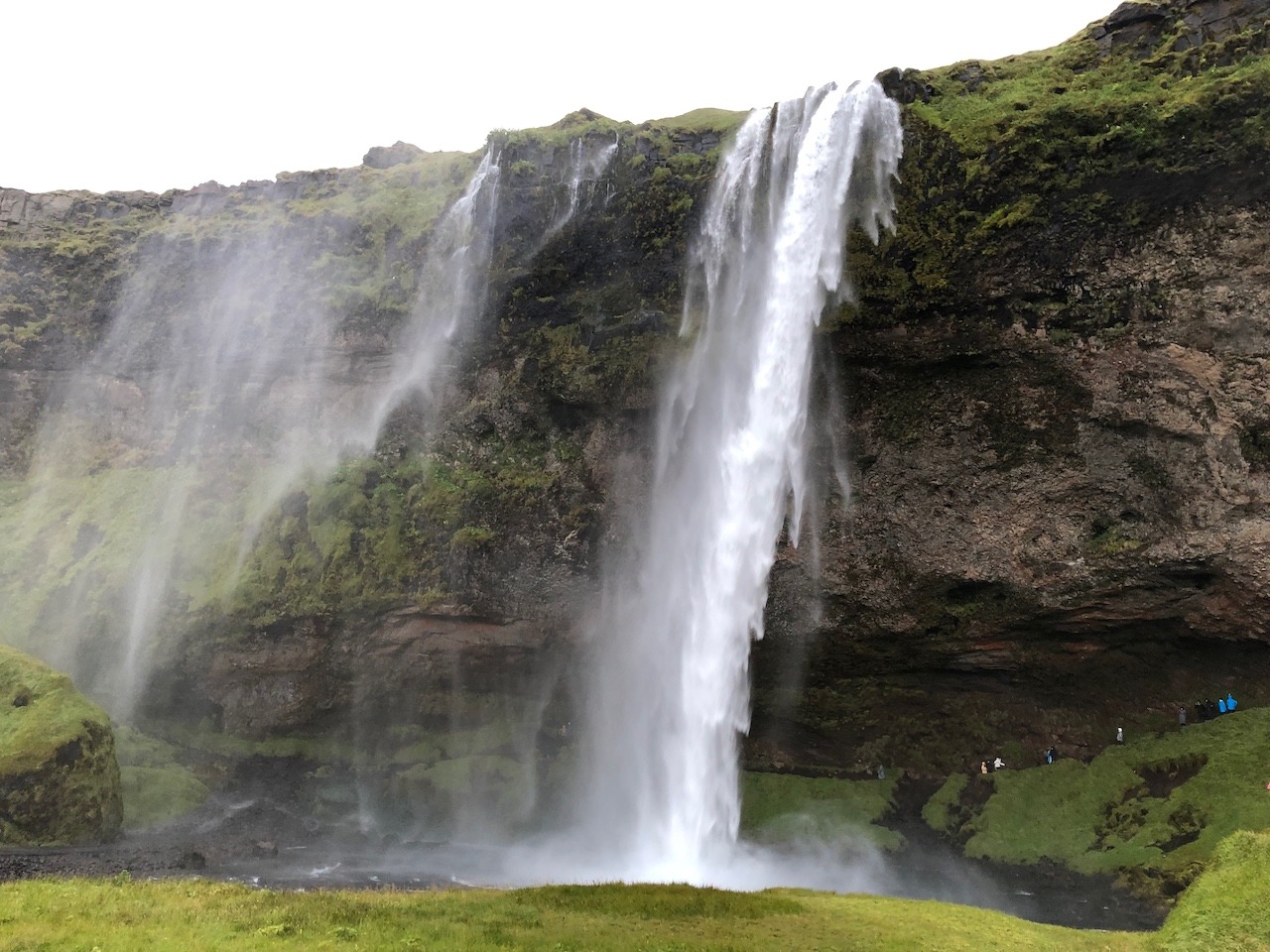
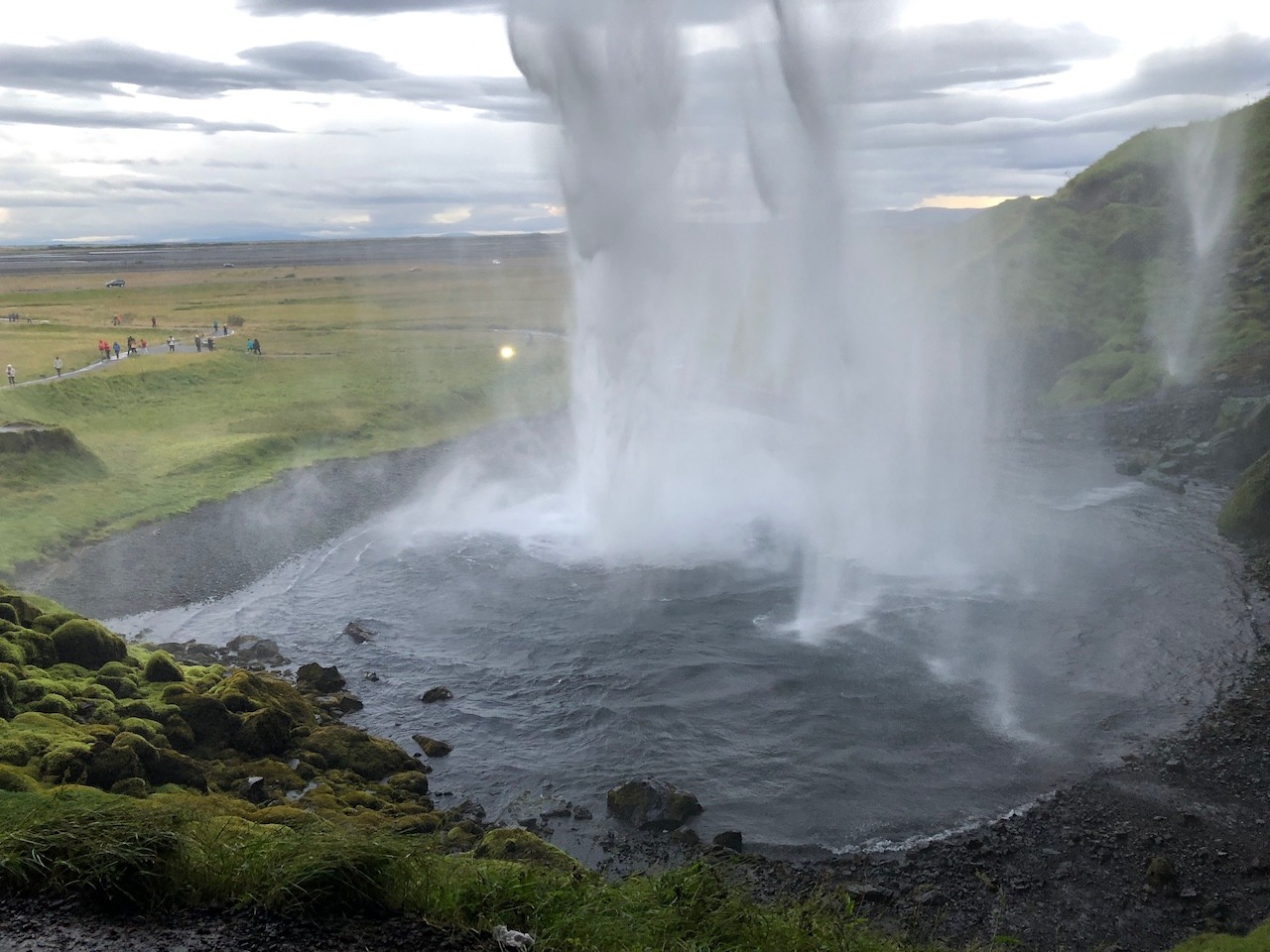
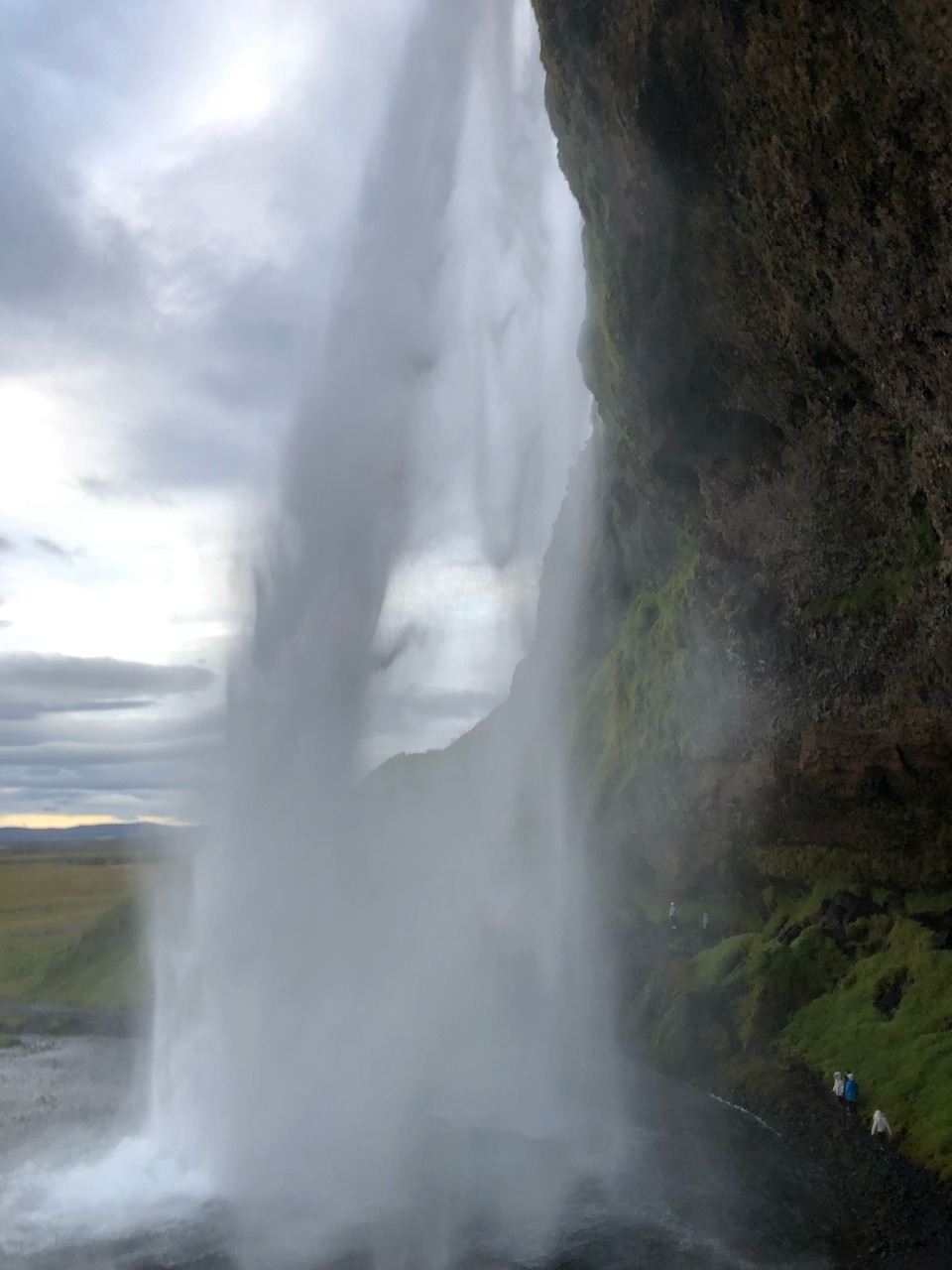
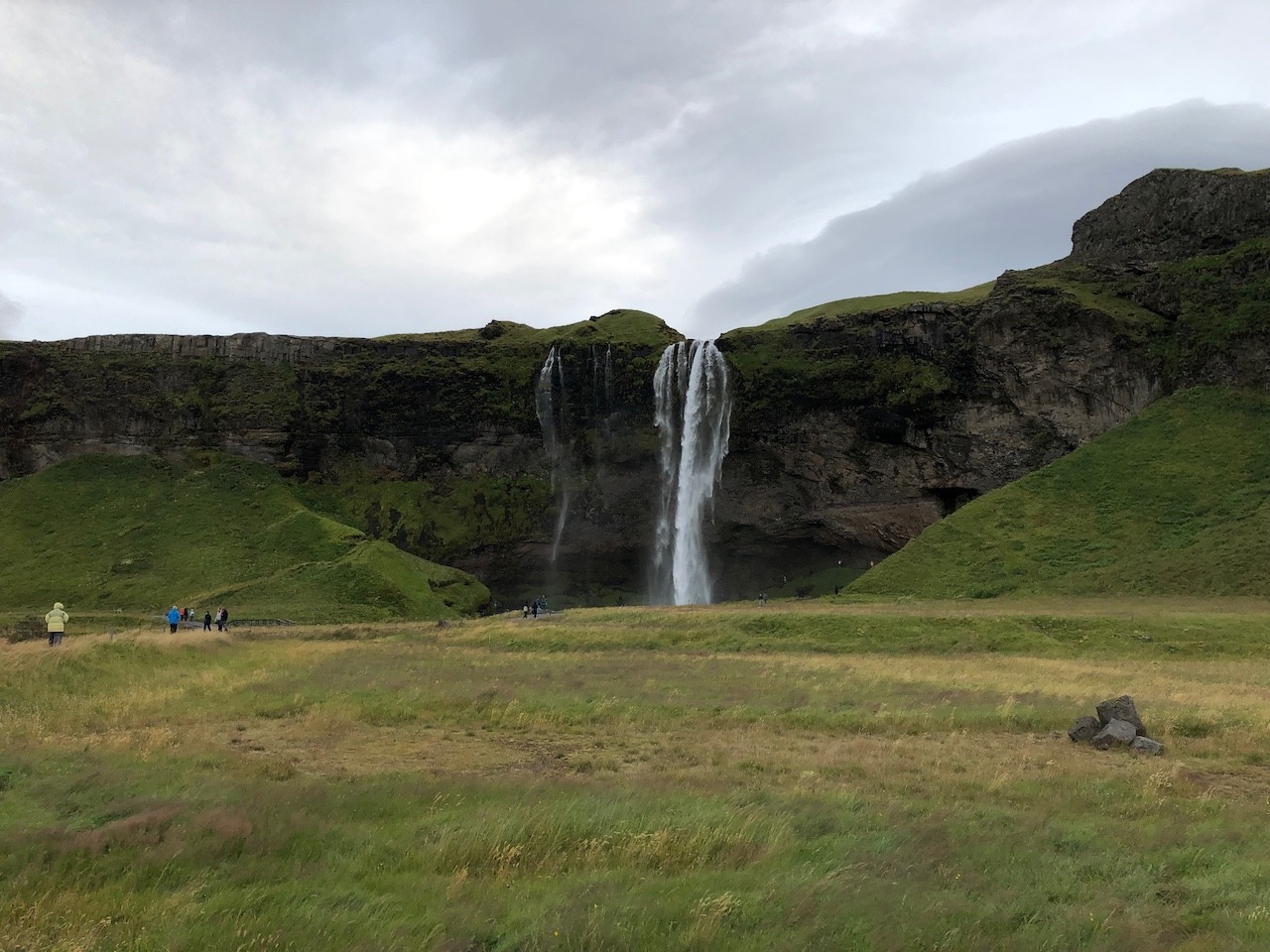
On the South Coast of Iceland, the Seljalandsá river flows down from Eyjafjallajokull – a glacier that sits atop a volcano. At one point along the path of this river is a cliff that is over 65 meters (213 feet) in height. The resulting waterfall is known as Seljalandsfoss and is a popular attraction for visitors. While enjoying the splendor of this site, a nearby sign was brought to my attention. To my surprise, it referenced a legend about a troll that was once in the area.
The sign itself provides only a few details. It states that the river passes through Tröllkonugil, which translates to “Troll Woman’s Gorge.” The legend is that, when an old troll woman tried to cross the gorge, she heard the bells of Ásólfsskálar Church and retreated back. Interestingly, the tale is present on the English and German text of the sign, but does not seem to be in the main Icelandic text.
Unfortunately, searching for more information about this folktale has yielded little. In one online source about the waterfall, it states the river flows through two troll-named features: Tröllagil (which is “Troll Gorge”, as opposed to “Troll Woman’s Gorge”) and Tröllagilsmýri, (“Troll Gorge Marsh”). I’ll also note that there is indeed a church called Ásólfsskálar nearby.
I also found that this isn’t the only troll story in the general area. Not too far from the waterfall is a cave known as Rútshellir or Hrútshellir. According to legend, it was carved out by a sinister man named Rútur (Hrútr). Apparently, some accounts say that he was actually a troll.
The story of the Troll Woman’s Gorge is consistent with broader troll folklore in that these creatures are often repelled by church bells. Trolls can represent the dangerous forces of nature and may link to the pagan beliefs of the past. Tales often mention that trolls are not Christian. As such, in a Christian worldview, the blessed ringing of the bell would keep such beings at bay.
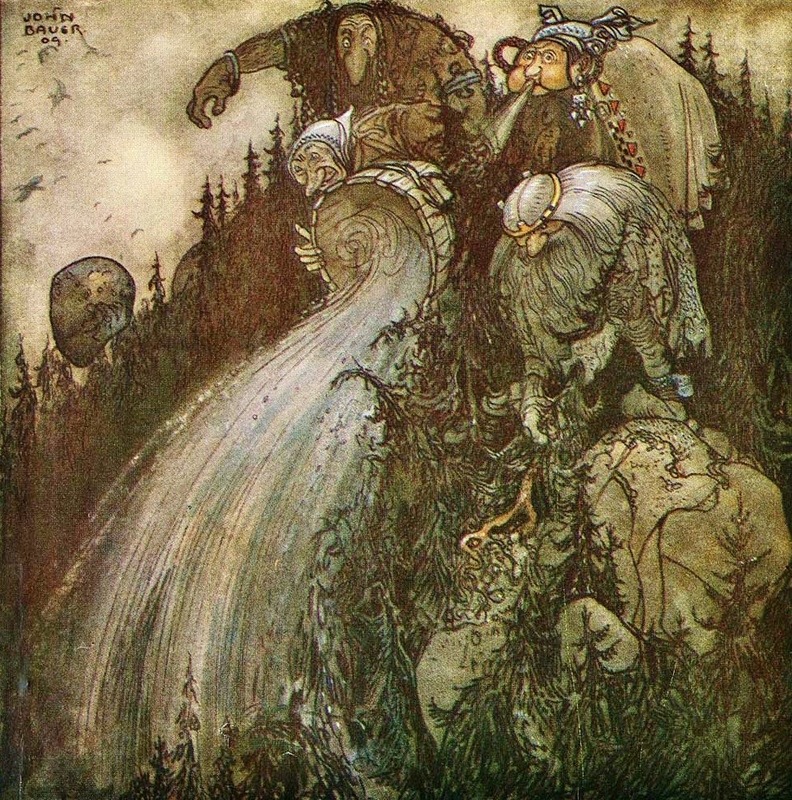
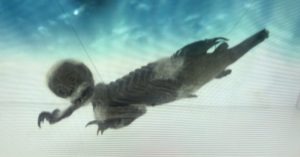
Troll illustration by John Bauer (Wikimedia Commons)
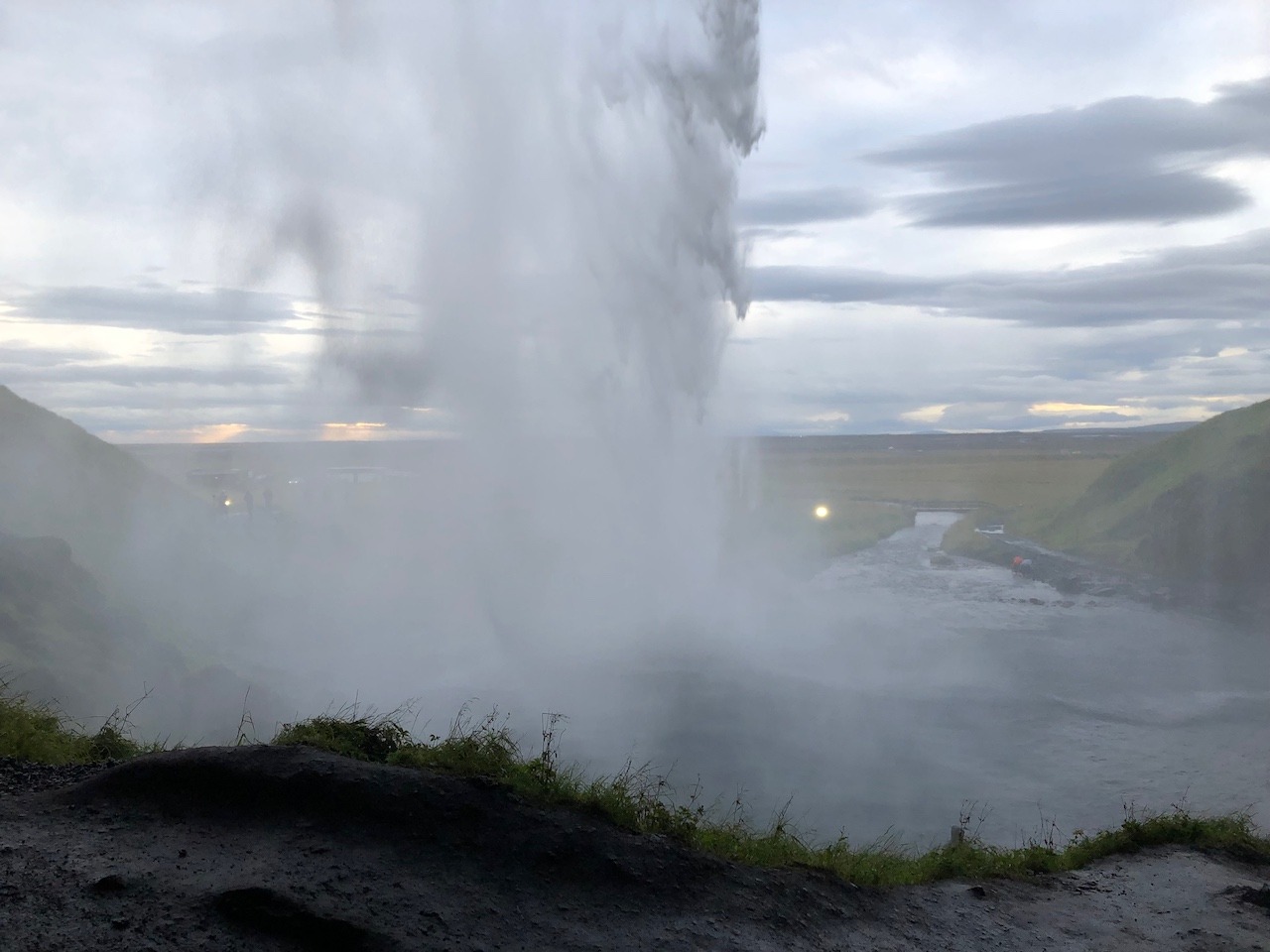
Of course, I saw no trolls at Seljalandsfoss. The church must still be deterring them. However, I did see a stunning waterfall that visitors can actually walk behind! Watch your footing and wear proper attire, as there is a lot of mist and spray. There is a shop and restroom facilities there, along with a parking lot (which does require a fee).
Seljalandsfoss is one of the many sites of natural beauty in Iceland. The fact that there is folklore attached to the region is not surprising. The landscape of Iceland inspires the imagination.
Location
Seljalandsfoss Waterfall
Þórsmerkurvegur (Road 249)
Off of Route 1 (Ring Road)
861 Hvolsvöllur
Iceland
View Sources
“Ásólfsskáli.” NAT travel guide. https://is.nat.is/asolfsskali/.
“Asolfsskali Church Farm.” NAT. https://nat.is/asolfsskali/.
“Eyjafjallajökull.” Wikipedia, last modified November 15, 2025. https://en.wikipedia.org/wiki/Eyjafjallaj%C3%B6kull.
Howell, Frederick W. W.. Icelandic Pictures Drawn with Pen and Pencil. United Kingdom: Religious Tract Society, 1893. https://www.google.com/books/edition/Icelandic_Pictures_Drawn_with_Pen_and_Pe/6ScLAAAAIAAJ.
Ragnarsdóttir, Regína Hrönn. “The Peculiar Rútshellir Cave in South Iceland.” Guide to Iceland. Last modified December 4, 2025. https://guidetoiceland.is/connect-with-locals/regina/the-peculiar-rutshellir-cave-in-south-iceland.
“Seljalandsfoss Waterfall.” FunIceland. https://www.funiceland.is/nature/waterfalls/seljalandsfoss/.
“Seljalandsfoss Waterfall Travel Guide.” Guide to Iceland. Last modified December 4, 2025. https://guidetoiceland.is/travel-iceland/drive/seljalandsfoss.
Written by A. P. Sylvia